Examining the Importance of Metal Foundries in Industrial Manufacturing
Metal foundries are indispensable in the domain of industrial production. They convert raw materials into essential components that cater to various sectors, from automotive to aerospace. Modern casting methods allow for the manufacturing of durable parts that considerably strengthen performance and safety. However, as they integrate modern advancements and face sustainability challenges, the future of these foundries is in question. What lies ahead for this critical industry is worth contemplating.
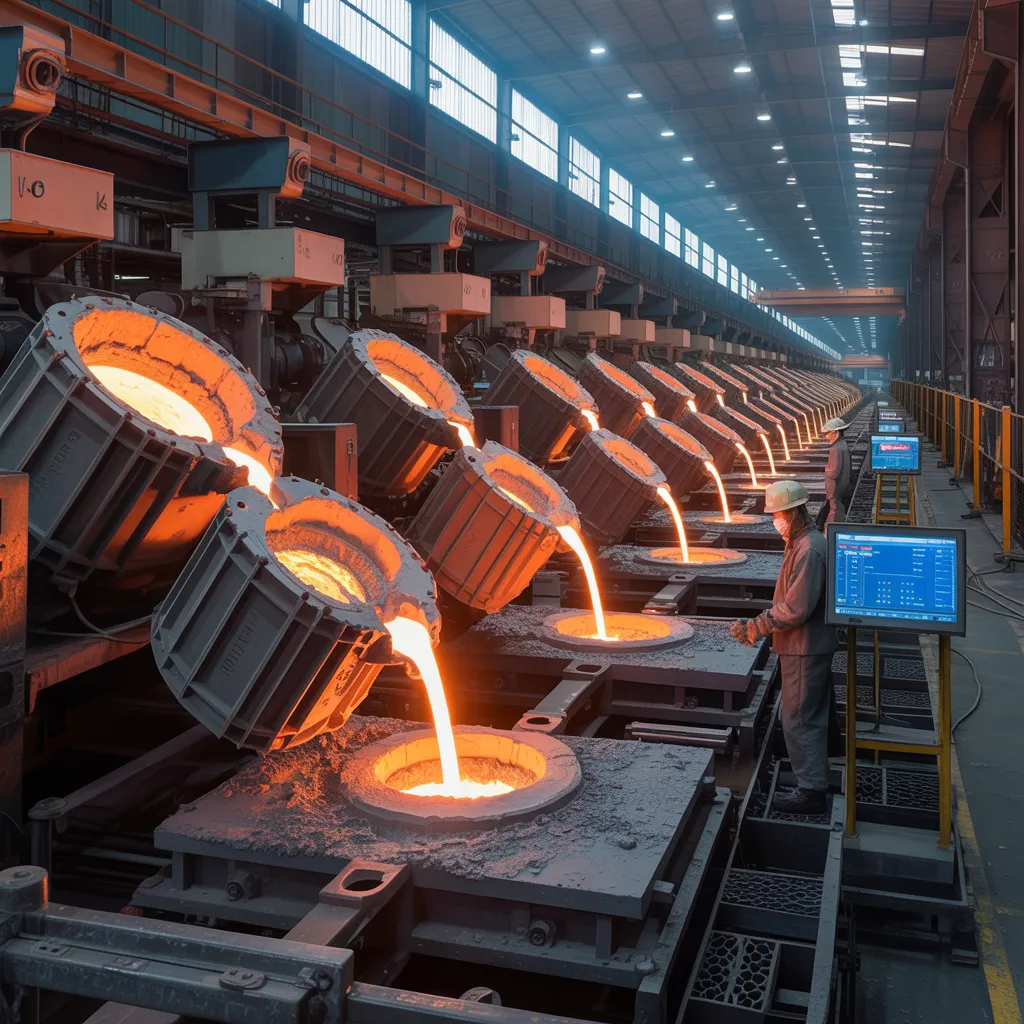
Exploring the Metal Casting Process
Metal casting transforms molten metal into finished solid components using a variety of methods. This process begins with melting the metal, commonly performed in a furnace, where it attains the necessary casting temperature. After melting, the metal is introduced into a mold, that establishes the configuration of the end product. Various methods such as sand casting, investment casting, and die casting are applied, each delivering specific advantages in precision and complexity.
The cooling process begins as the melted metal sets within the mold, enabling it to assume the required configuration. Following the solidification process, the mold is removed, and the casting is often subjected to refinement procedures like surface treatment or machining to enhance its properties. Comprehending these essential stages is essential for optimizing production efficiency and maintaining the integrity of the completed castings, establishing the metal casting method a key component of present-day industrial fabrication.
The Historical Progression of Metalworking Foundries
As cultures evolved, the evolution of metal foundries was essential to industrial progress. At first, early civilizations used rudimentary smelting processes to obtain metals from mineral ores, with evidence of copper and bronze casting traced back to 4000 BCE. The emergence of iron casting circa 1200 BCE marked a significant shift, making possible the manufacture of stronger tools and weapons.
Throughout the Middle Ages, foundries evolved further with the emergence of sophisticated furnaces and molds, enabling increased production efficiency. The Renaissance era marked the introduction of principles of science into the art of metalworking, enhancing both quality and precision.
The Industrial Revolution drove the proliferation of metal foundries, as steam power and industrialization reshaped production potential. By the late 19th century, foundries grew indispensable to various industries, supplying essential parts for machinery, transportation, and infrastructure. This historical trajectory underscores the pivotal importance of metal foundries in forming the foundation of modern industry.
Uses of Metal Casting in Industrial Settings
Metal casting plays an essential role in various industries, markedly impacting production processes. In the automotive sector, it is essential for creating parts that improve vehicle safety and performance. Likewise, its applications in aerospace and construction equipment production highlight the versatility and importance of metal casting in today's industrial production.
Automotive Parts Manufacturing
In the realm of automotive component production, metal casting serves a vital function in producing key parts that require both strength and precision. This method facilitates the development of elaborate designs, which prove essential in parts including engine blocks, transmission housings, and suspension parts. By employing metals like aluminum and iron, manufacturers are able to develop parts that balance low weight with durability that boost vehicle capability and fuel economy. Advanced casting techniques, including sand casting and die casting, enable high-volume production while maintaining tight tolerances. Furthermore, the ability to recycle metal scrap within foundries reinforces green initiatives within the automotive sector. As vehicles evolve with new technologies, the need for cutting-edge casting approaches keeps increasing, reinforcing the importance of metal foundries in automotive manufacturing.
Applications in the Aerospace Industry
The aviation sector heavily relies on metal casting to manufacture vital components that demand outstanding durability and reduced weight. Components such as turbine blades, structural frames, and engine parts are commonly produced using sophisticated casting methods. These processes allow for complex configurations that optimize aerodynamic capability and function while minimizing weight. Metals like aluminum, titanium, and superalloys are frequently employed due to their exceptional strength-to-weight properties and ability to withstand extreme heat. Furthermore, accurate casting techniques guarantee tight tolerances, which are critical for reliability and effectiveness in aerospace applications. As the field progresses, developments in casting techniques persistently enhance component performance, leading to more economical and dependable aircraft configurations. This emphasizes the fundamental role of metalworking foundries in supporting aerospace advancements.
Heavy Machinery Components
Several parts found in construction equipment are manufactured through metal casting, demonstrating its critical role in the industry. Key parts such as engine blocks, transmission housings, and chassis components benefit from the exactness and resilience that casting affords. The process enables complex geometries, which are essential for the effective operation of heavy machinery. In addition, metal casting materials such as ductile iron and steel offer the necessary strength to endure harsh working conditions. The potential to manufacture large quantities of parts with uniform quality further enhances the durability of construction equipment. As the appetite for effective and sturdy machinery expands, the metal foundry sector proves indispensable to driving construction technologies, ensuring that equipment satisfies industry standards and operational requirements.
Innovative Technologies Revolutionizing Foundry Production
As the demand for enhanced precision and efficiency in manufacturing expands, cutting-edge technologies are revolutionizing foundry operations. Modern automation, most notably through robotics, is improving the precision and efficiency of metal casting operations. Such robotic solutions are capable of executing repetitive tasks with very few errors, cutting labor costs and ensuring greater consistency in output.
Additionally, the utilization of 3D printing is reshaping mold production, enabling accelerated prototyping and complex geometries that traditional techniques cannot achieve. This approach not only cuts manufacturing timelines but also limits material waste.
Data analytics alongside the Internet of Things (IoT) are further optimizing operations by enabling real-time monitoring of equipment and processes. Such technologies enable predictive maintenance, reducing downtime and enhancing overall productivity.
Collectively, these advancements are transforming the terrain of foundry manufacturing, driving manufacturers towards more efficient and precise operations in a challenging manufacturing environment.
Why Sustainability Matters in Metal Foundries
Whereas metal foundries have long concentrated on production efficiency and cost-effectiveness, the increasing emphasis on sustainability is reshaping industry priorities. As global awareness of environmental issues rises, foundries are recognizing the need to minimize their ecological footprint. This change is propelled by regulatory demands, consumer interest in greener products, and the enduring financial rewards of adopting sustainable practices.
Utilizing energy-saving technologies and recycling materials not only saves resources but also cuts operational costs. Furthermore, adopting eco-friendly practices strengthens the standing of metal foundries, securing partnerships and customers who champion environmental responsibility.
Environmental responsibility in metal foundries additionally drives innovation; businesses are investigating alternative materials and techniques that reduce environmental harm. In the end, adopting sustainable practices is growing increasingly vital for foundries to stay competitive in an industry that progressively prioritizes environmental responsibility alongside conventional performance standards.
What Obstacles Are Metal Foundries Confronting Today?
Metal foundries are currently grappling with several significant challenges that influence their overall performance. Increasing energy expenditures and a persistent shortage of skilled labor complicate production processes, pertinent information while rigorous environmental standards place extra regulatory demands on operations. Addressing these issues is essential for the long-term viability and competitiveness of the industry.
Growing Energy Expenses
Escalating energy expenses present a major obstacle for metal foundries, affecting their operational performance and profit margins. As energy prices fluctuate, foundries experience growing expenditures related to melting, casting, and finishing procedures. These escalating expenses can result in narrower profit margins, prompting some foundries to reevaluate their pricing approaches or operational workflows. Moreover, the requirement for energy-consuming equipment and technology intensifies the financial pressure. Foundries may be driven to adopt energy-saving measures to reduce these costs; yet these investments demand considerable upfront financial resources. Additionally, the competitive landscape intensifies as foundries aim to maintain their market position while maneuvering through these economic pressures. Consequently, managing energy costs remains a critical priority for the sustainability of metal foundries.
Shortage of Skilled Labor
With the growing demand for intricate metal components, foundries are struggling with a significant skilled labor shortage that jeopardizes their operational efficiency. Numerous veteran employees are reaching retirement age, and there are inadequate new candidates to fill these roles. This shortage causes increased labor costs and delays in production schedules. Foundries often find it challenging to attract younger talent, as the industry is seen as less attractive compared to high-tech sectors. Additionally, the technical knowledge demanded by metal casting and machining need considerable time to master, worsening the problem. Consequently, foundries may struggle to meet market demands, undermining their competitive edge and financial performance. Tackling this shortage is vital for sustaining growth in the metal foundry industry.
Environmental Regulations Compliance
Meeting environmental regulatory requirements creates substantial challenges for foundries within today's industrial sector. These operations face growing pressure to reduce emissions and waste while embracing cleaner technologies. The multifaceted regulatory landscape, which shifts across regions and changes regularly, introduces uncertainty and necessitates ongoing adaptation. Budget restrictions compound compliance challenges, as the costs associated with new equipment or processes can be significant. Furthermore, foundries must contend with the challenge of guaranteeing that their employees are sufficiently trained in environmental standards. Non-compliance can lead to hefty fines and damage to reputation, emphasizing the need for ongoing monitoring and management systems. Maintaining a careful balance between operational performance and regulatory conformity remains an essential challenge for the long-term sustainability of metal foundries.
Next-Generation Breakthroughs in Metal Foundry Technologies
The trajectory of metal foundry technologies presents extraordinary developments that could reshape industrial production. Breakthroughs such as additive manufacturing are becoming increasingly prominent, enabling the development of intricate geometries and minimizing material waste. Furthermore, the incorporation of artificial intelligence and machine learning improves process efficiency, supporting real-time oversight and predictive maintenance.
Environmental responsibility is also a central focus; advanced recycling techniques and eco-friendly materials are being developed to minimize environmental impact. Incorporating 3D printing technology in foundries has the potential to simplify prototyping and shorten lead times, resulting in more flexible production.
In addition, developments in automation and robotics aim to advance safety and efficiency within foundry operations. Such technologies not only have the potential to increase operational productivity but also to create safer working environments. As such innovations continue to develop, they will undoubtedly lead to a more sustainable, efficient, and responsive foundry industry, profoundly changing the landscape of global industrial manufacturing.
Common Questions and Answers
Which Types of Metals Are Most Commonly Used in Foundries?
Metals frequently used in foundries consist of iron, aluminum, copper, and brass. Each metal serves specific applications, with iron being chosen for strength, aluminum for structures requiring minimal weight, and copper for electrical conductivity and corrosion resistance.
How Do Foundries Maintain Quality Control in Manufacturing?
Foundries ensure quality control in production through strict evaluation of raw materials, continuous monitoring during the melting and casting processes, and upholding stringent industry standards, delivering high-quality metal products that fulfill specifications.
What Safety Measures Are Implemented in Metal Foundries?
Metal casting facilities employ several safety measures, including safety equipment for personnel, ventilation systems to minimize inhalation of fumes, regular equipment maintenance, safety training programs, and contingency response procedures to minimize dangers connected to molten metal operations.
How Do Foundries Manage Waste and Byproducts?
Foundries handle waste and byproducts through treatment processes, recycling, and responsible disposal. They implement approaches to reduce environmental impact, ensuring compliance with regulations while advancing sustainable practices across their operations and local communities.
What Employment Opportunities Can Be Found in the Metal Foundry Industry?
Career opportunities in the foundry industry include roles such as skilled metal technicians, quality assurance specialists, technical engineers, and foundry managers. Furthermore, positions in R&D, maintenance, and environmental oversight are also accessible, ensuring diverse prospects.